The 2025 DORA Report: Why AI is a Mirror, Not a Cure for Bad Architecture
We have reached an inflection point in generative AI integration. While individual developers are outputting code faster than ever using LLMs, the macro-level impact on engineering organizations is far more complex. The inaugural 2025 DORA State of AI-assisted Software Development report, which surveyed nearly 5,000 global technology professionals, provides a sobering, data-backed reality check: AI is an amplifier, not a cure-all.
For high-performing organizations with mature processes, AI acts as a powerful accelerator. For organizations burdened by technical debt and legacy workflows, it magnifies existing system defects.
If you are a software developer or engineering lead aiming to scale your AI capabilities, here is what the data reveals about building a resilient, AI-assisted development lifecycle.
The Downstream Bottleneck and the "Speed vs. Stability" Myth
Optimizing for local productivity (e.g., generating boilerplate in an IDE) while ignoring system-level throughput is a common anti-pattern. When developers use AI to rapidly generate code, they inject a massive volume of changes into the delivery pipeline.
As noted in the IT Revolution analysis of the report, this sudden acceleration exposes downstream weaknesses. Without robust automated testing, reliable version control, and fast feedback loops, an increased volume of changes leads to:
- High change failure rates
- Silently deleted or broken test suites
- Degraded runtime services and longer recovery times
The full report PDF continues to debunk the classic "speed vs. stability" trade-off. Looking at the data, the highest-performing teams—termed Harmonious High-Achievers—excel at both deployment frequency and stability simultaneously. Conversely, teams experiencing Foundational challenges struggle with both throughput and stability. They find themselves stuck in a cycle of manual remediation, high friction, and developer burnout.
[ AI Assistant ] ---> ( Rapid Code Gen ) ---> [ Tightly Coupled Pipeline ] ---> Chaos & Incidents

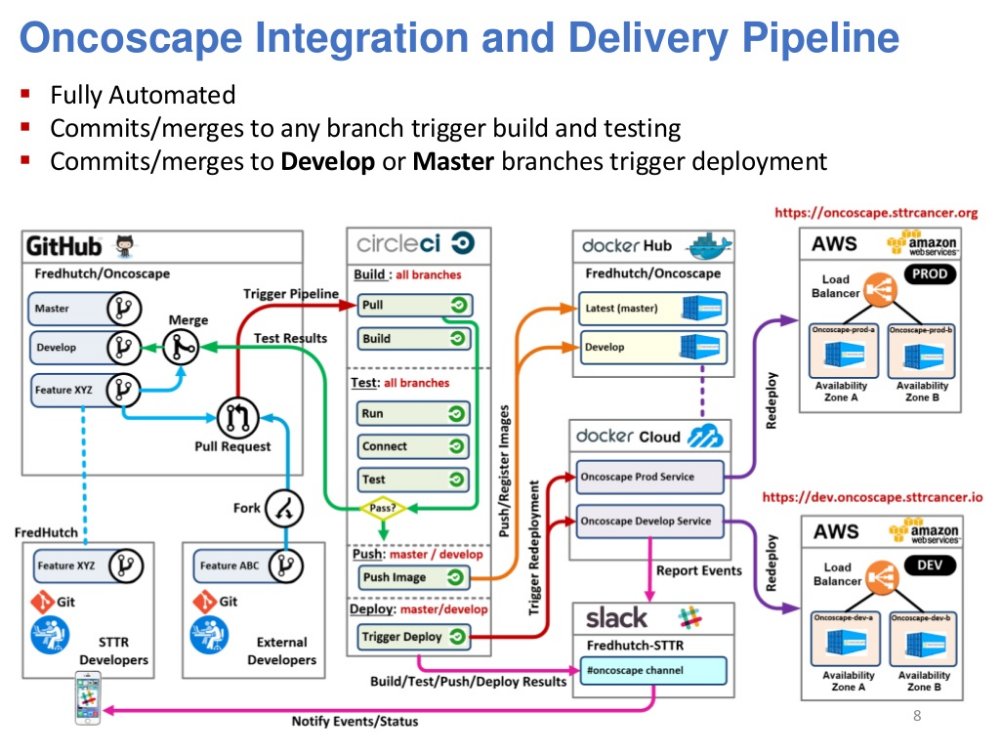
[ AI Assistant ] ---> ( Rapid Code Gen ) ---> [ Mature CI/CD & Testing ] ---> High-Velocity Value
Platform Engineering and "Risk Compensation"
To translate AI code generation into true organizational value, teams must establish a robust platform foundation. The DORA data reveals that 90% of organizations have adopted at least one internal developer platform (IDP). There is a direct correlation between a high-quality platform and the ability to safely leverage AI.
Interestingly, the report highlights a pattern of "risk compensation" in organizations with high-quality platforms. These teams see a slight increase in minor software delivery instabilities. Because their platforms enable fast rollbacks, rapid hotfixes, and automated canary deployments, developers can safely experiment more. They accept low-impact failures because their Mean Time to Recover (MTTR) is negligible. This is a sign of a mature, high-velocity engineering culture.
To help guide teams through this operational shift, Google Cloud has introduced the DORA AI Capabilities Model. This companion framework outlines seven foundational practices designed to safely integrate AI. Implementing Value Stream Management (VSM) alongside these capabilities ensures that local code generation translates into production-ready product performance rather than piling up as unmerged pull requests.
Where Does Your Team Stand?
The 2025 report categorizes engineering teams into seven distinct archetypes. The two extremes highlight the stark reality of the "AI mirror effect":
- Harmonious High-Achievers: These teams operate in loosely coupled architectures with fast feedback loops. AI is integrated cleanly into their daily workflows, enhancing both delivery speed and team well-being.
- Foundational Challenges: These teams are trapped in survival mode. They face severe process gaps, manual testing bottlenecks, and high cognitive load. For these teams, throwing AI tools at the problem only worsens burnout and process friction.
The Developer's Action Plan
If you want to maximize your return on AI investments, move your focus away from the IDE and toward your delivery pipeline:
- Strengthen the Guardrails: Invest in robust automated unit, integration, and regression testing. AI-generated code must be validated automatically before it reaches staging.
- Decouple Your Architecture: Move away from monolithic dependencies that delay integration. Fast feedback loops are essential when managing high volumes of code.
- Elevate Platform Engineering: Focus on building self-service internal platforms that simplify deployment, monitoring, and recovery.
AI-assisted development is a systems problem, not a tooling problem. To benchmark your practices, read the Google Cloud Blog announcement and download the full 2025 DORA State of AI-assisted Software Development report.